

Your eyes rely on a steady film of tears to stay smooth and clear. As you get older, the glands that produce those tears slow down, leaving less moisture behind with every blink.
It’s not just about volume, either. The quality of your tears changes too, so they evaporate faster and can leave your eyes feeling raw. Many people notice more discomfort once they pass 50.
Yes, dry eye often gets worse with age, since tear production and quality both decline over time. The right care can still help you manage the symptoms and stay comfortable.
Why Dry Eye Gets Worse With Age
Aging affects your tears in more than one way. There are 2 big categories of factors that work together to leave your eyes feeling parched.
Slower Tear Glands and Oil Buildup
Your lacrimal glands produce the watery part of your tears, and that production drops as you age. Meanwhile, the oil glands along your eyelids can clog. Without that oily layer, your tears evaporate faster than your blinks can replace them.
Medications and Health Conditions
Several everyday medications list dry eyes as a side effect, including blood pressure pills and allergy tablets.
Health conditions play a role too. Diabetes, arthritis, and thyroid problems all connect to dry eye. And hormonal changes during menopause can add to the dryness.
Signs and Symptoms You Shouldn’t Ignore
Dry eye can sneak up on you in different ways. Watery eyes might seem like the opposite problem, but they’re often a sign your eyes are too dry, not too wet.
Watch for these symptoms throughout your day:
- Burning, stinging, or a scratchy feeling
- Redness
- Watery eyes
- Blurry vision
- Light sensitivity

When Dry Eye Turns Serious
Mild dryness comes and goes. But some signs point to something bigger. Pay attention to ongoing pain or trouble reading for more than a few minutes, and if your symptoms stick around for several weeks, book an exam and get some answers.
Everyday Habits That Ease Dry Eyes
Small changes at home can make your eyes feel better day to day. Drink water throughout the day, and run a humidifier to add moisture back into the air during dry winter months.
Screens are hard on your eyes because you blink less when you’re focused on a task. Take a break every 20 minutes and blink on purpose to spread fresh tears across your eyes. Reach for sunglasses when you head outside; they can shield your eyes from wind and smoke that speed up dryness.
Food and Vitamins That Help
Certain foods can support your tear health too. Omega-3 fats from fish and walnuts help your oil glands work properly, and vitamin A from carrots and broccoli supports the surface of your eyes. Aim for a balanced diet, and give your body what it needs for steady, comfortable tears.
When Home Care Isn’t Enough
When daily habits aren’t cutting it, a personalized plan can help. We build a dry eye therapy plan around your symptoms and your day-to-day life, so the care actually fits you.
Treatment can include:
- Artificial tears to add moisture
- Warm compresses to unblock oil glands
- Gentle lid care to keep your eyelids clean
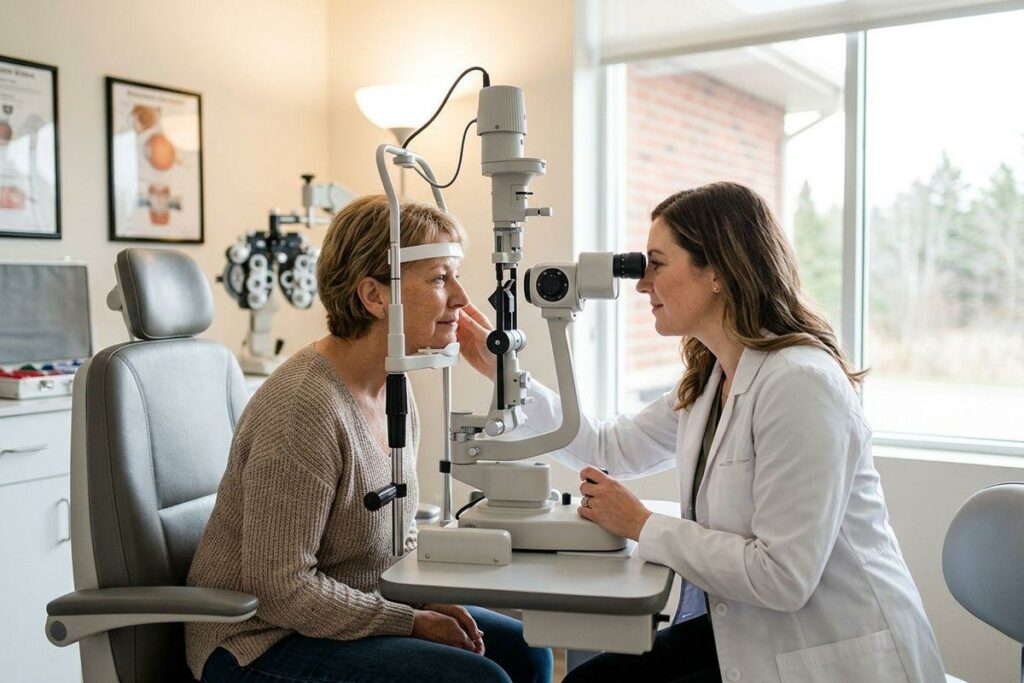
We also use diagnostic tools to analyze your tears and pinpoint the cause of your discomfort.
Let’s Get Your Eyes Feeling Better
Dry eye doesn’t have to slow you down as you age. It’s common, it’s manageable, and you don’t have to just live with it. At Brantford Eye Care, we take the time to understand your lifestyle and figure out what’s actually behind your discomfort, then build a plan around it.
Book your dry eye exam and take the first step toward more comfortable eyes.