

Blurry spots and faded colours at the centre of your vision can be unsettling. People living with dry age-related macular degeneration (AMD) often find these visual changes easy to dismiss at first, but harder to ignore over time. Taking a proactive approach to your eye care makes a big difference.
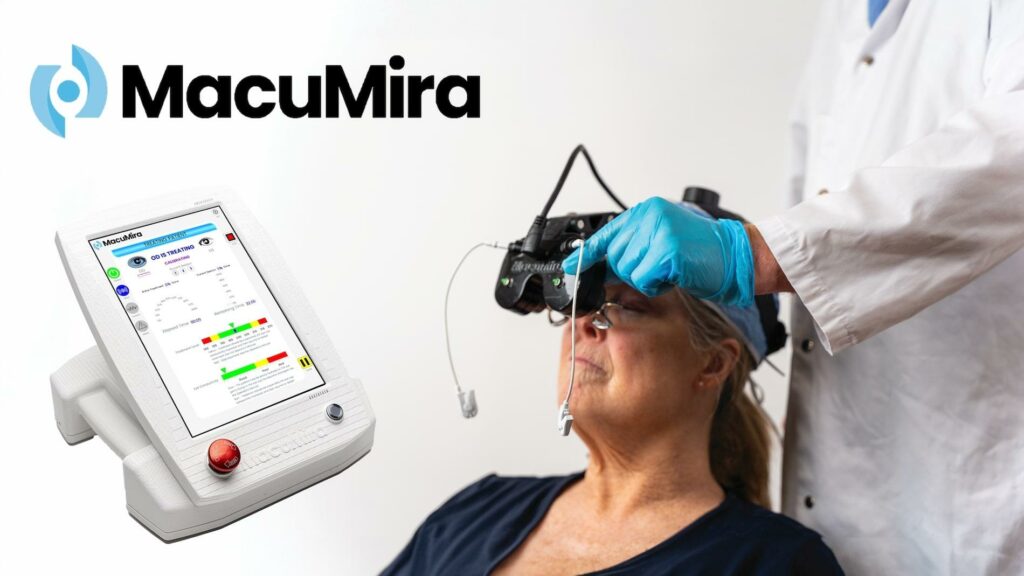
MacuMira is an in-office treatment that uses low-level microcurrent stimulation through closed eyelids to support retinal function in people with dry AMD. Brantford Eye Care is proud to offer MacuMira for dry AMD, helping patients access this treatment option close to home in Brantford.
What MacuMira Is and How It Works
MacuMira uses low-level microcurrent stimulation delivered through closed eyelids. During treatment, gentle electrical currents are applied to ocular tissues to stimulate retinal activity and support the function of cells involved in central vision. The goal is to help preserve or improve functional vision in people with dry AMD.
There are no needles, no surgery, and nothing invasive involved. And because the sessions happen right in the office, it’s a manageable option for adults wanting to stay proactive about their eye health.
Who MacuMira Is Right For
It’s not a fit for every AMD diagnosis. Your optometrist will look at where your condition currently stands before recommending it as part of your care plan.
If reading has become harder, your central vision seems dim, or straight lines appear wavy, it’s important to book an eye exam. Your optometrist can determine whether your symptoms are related to dry AMD or whether another condition, such as wet AMD, needs to be ruled out.
Before any treatment begins, your optometrist carries out a thorough eye exam to assess your retinal health in detail. This includes reviewing your vision history, any symptoms you’ve been experiencing, and retinal imaging to understand the current state of your AMD. Optical coherence tomography (OCT) is one common imaging tool used to get a detailed cross-section view of your retinal layers. That information shapes a plan that fits your specific situation.
Your First MacuMira Appointment
The session itself is straightforward and comfortable. You sit comfortably while the MacuMira device delivers gentle microcurrent stimulation through closed eyelids. The treatment is generally comfortable, and most people find the process easy to get through. Each treatment session typically takes about 30 minutes, though appointment length may vary slightly depending on any additional testing.

Treatment isn’t a one-time visit. You’ll likely have multiple sessions scheduled over several weeks, allowing us to monitor how your vision and retinal health respond over time. Your optometry team will map out a schedule that works around your life.
Many patients can return to regular activities right away, but your optometrist will let you know if any appointment-specific precautions apply. Just remember to ask the clinic whether you should arrange transportation if your appointment includes dilation.
Results and What to Watch For
Progress looks different for each person. Some patients notice clearer vision or improved contrast within the first few weeks, while others experience more gradual changes. Improvements, when they occur, may be subtle at first and are often related to contrast sensitivity, visual clarity, or central vision tasks such as reading.
Because progress looks different for each person, follow-up eye exams are an important part of the process. These visits allow your optometrist to monitor your retina, review new imaging, and adjust your plan if needed. Tracking changes over time gives a clearer picture than any single visit can.
MacuMira as Part of Your Long-Term Eye Health Plan
MacuMira doesn’t replace routine monitoring. AMD can continue to change even after completing your sessions, so regular check-ins help detect any progression early. This therapy pairs well with a broader eye disease management plan.
Care doesn’t stop when you leave the office.
Your optometrist may discuss several supportive habits to keep your eyes feeling their best:
- Improving your daily nutrition
- Quitting smoking
- Wearing UV protection outdoors
- Monitoring vision changes with an Amsler grid
- Taking AREDS2 supplements
Dry AMD Support Is Here
Managing dry AMD requires the right team, regular monitoring, and a care plan built around your retinal health. MacuMira may be an option for some people with dry AMD, but the first step is understanding what is happening with your vision and whether this treatment is suitable for your needs.
If you or someone in your family has been diagnosed with dry AMD or is noticing changes in central vision, schedule a comprehensive eye exam with Brantford Eye Care in Brantford. Our team can assess your retinal health and help determine whether MacuMira may be a suitable part of your long-term care plan.